
Maldives coral protection explained through resort reef projects, coral gardening, marine nurseries and programs helping reefs stay alive.
The Maldives are famous for their turquoise lagoons, dreamy islands and coral gardens. But beneath the surface, the reefs are facing a much harder reality. Rising sea temperatures, repeated bleaching events and El Niño-driven marine heatwaves are putting corals under growing pressure.

To protect corals, several Maldives resorts have implemented a series of initiatives for its preservation and restoration.
It cannot stop the ocean from warming. It cannot protect reefs from El Niño. But it can help preserve living coral fragments, rebuild small reef habitats, support marine research and give damaged reefs a better chance to recover.
A decade ago, coral restoration in Maldives resorts was still a quiet, almost pioneering effort. Only a handful of islands had coral frames, nurseries or marine biologists working visibly on reef recovery. Today, the picture is changing. Across the archipelago, these programs are multiplying, from coral adoption and reef nurseries to marine labs and experimental restoration techniques. The movement is growing because the urgency is growing too.
Across the Maldives, several resorts now run documented coral restoration, coral gardening, coral adoption or marine preservation programs. Some are guest-supported. Others are led by marine biologists, NGOs or long-term scientific partners.
Here are some of the strongest and most documented coral preservation programs currently found in Maldives resorts.

If your main interest is snorkeling, you can also read my guide to the best Maldives resorts for snorkeling we have personally seen, based on years of resort visits and house reef explorations across the atolls.
The Toll of Coral Decline in the Maldives, and Why I Care
At Dreaming of Maldives, reefs are not an abstract subject. We have explored the Maldives for more than 20 years, stayed in many resorts, filmed their lagoons, photographed their islands from above and spent countless hours snorkeling their house reefs.

My resort reviews, Maldives videos and snorkeling guides are built from real field experience. We have seen healthy coral gardens, damaged reefs, spectacular house reefs, poor snorkeling islands, reef walls, lagoon reefs and the slow changes that happen underwater over time.
That is why coral restoration matters here. It is directly connected to the Maldives experience, to the beauty of the islands, to marine life and to the choice of the right resort for snorkeling.
Coral protection in the Maldives. These Resort Programs Matter
These initiatives are not a miracle solution. When sea temperatures remain too high, restored corals can bleach too. But these projects still matter because they preserve living coral material, monitor reef health, identify stronger coral colonies and rebuild small habitats where fish and marine life can return.
Coral gardening
In the Maldives, several resorts actively practice coral gardening. Many of these reef nurseries are built using branching and table corals, particularly Acropora, a fast-growing species that can be found all around the islands’ shallow reefs.
However, they are also highly vulnerable to bleaching, making coral preservation work both urgent and fragile.
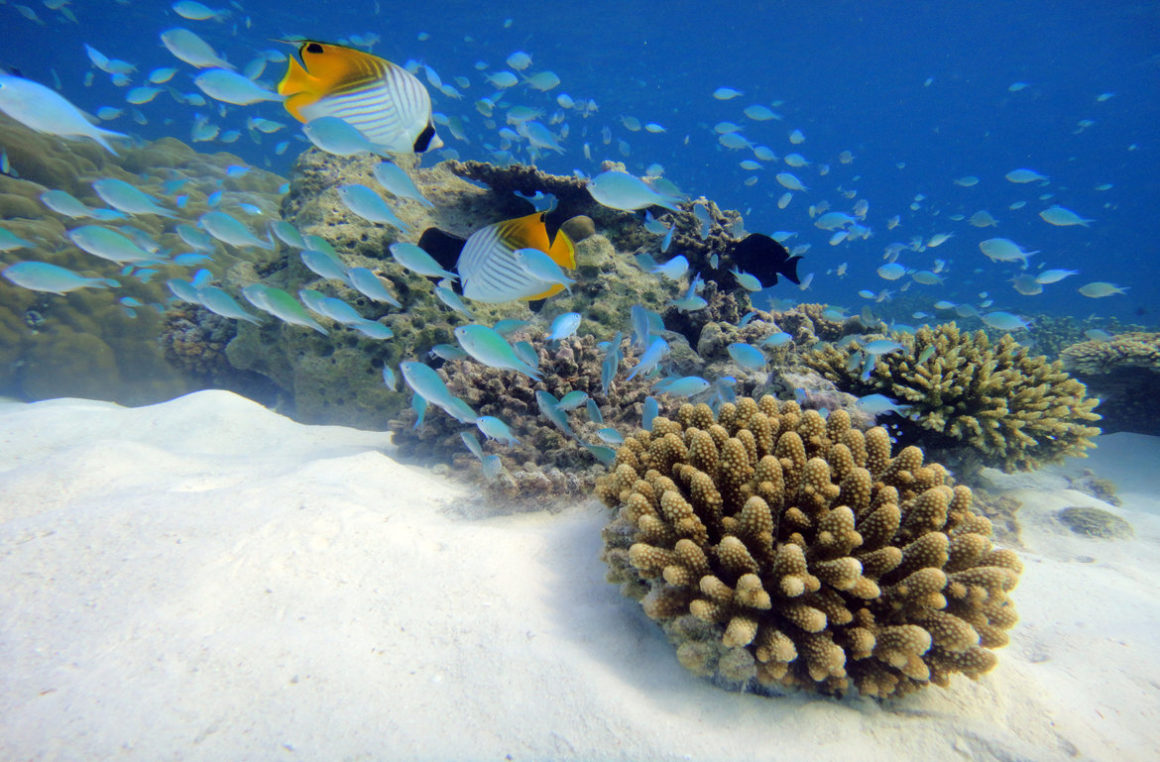
Life in the reef : Blue damselfish and butterflyfish surrounding a healthy Acropora colony in the shallow lagoon of Baros Maldives.
The Resorts Helping Rebuild Maldives Reefs
The resorts below are not the only ones working on coral protection and restoration in the Maldives. Several others also run serious reef preservation projects, sometimes smaller or just newer, so they matter too.
Coral gardening in the Maldives is not a competition between resorts. Every frame, every nursery, every rescued fragment counts, especially now that reefs are facing warmer seas and repeated bleaching stress.
Soneva Fushi in Baa Atool and Soneva Jani, in Noonu Atoll
Soneva Conservation and Sustainability Maldives (CSM) operates one of the largest coral restoration programs in the Indian Ocean.
The resorts’ coral work is led through Soneva Conservation and Sustainability Maldives, a Maldivian NGO established in 2023 to advance coral reef regeneration, marine research and community stewardship.

Besides its operation on Kunfunadhoo, home of Soneva Fushi, and Medhufaru, where Soneva Jani stands, the program operates across several islands connected to the Soneva world, including Muravandhoo, Maaranfushi and Maalhosand.
Its work includes coral restoration, coral propagation and research, positioning Soneva as one of the most ambitious resort-linked coral regeneration networks in the Maldives.
Soneva is also endorsed by the UN and listed on the UNESCO Ocean Decade platform.
I already followed this subject in my dedicated article : Soneva has launched an ambitious programme to restore coral reef in the Maldives.
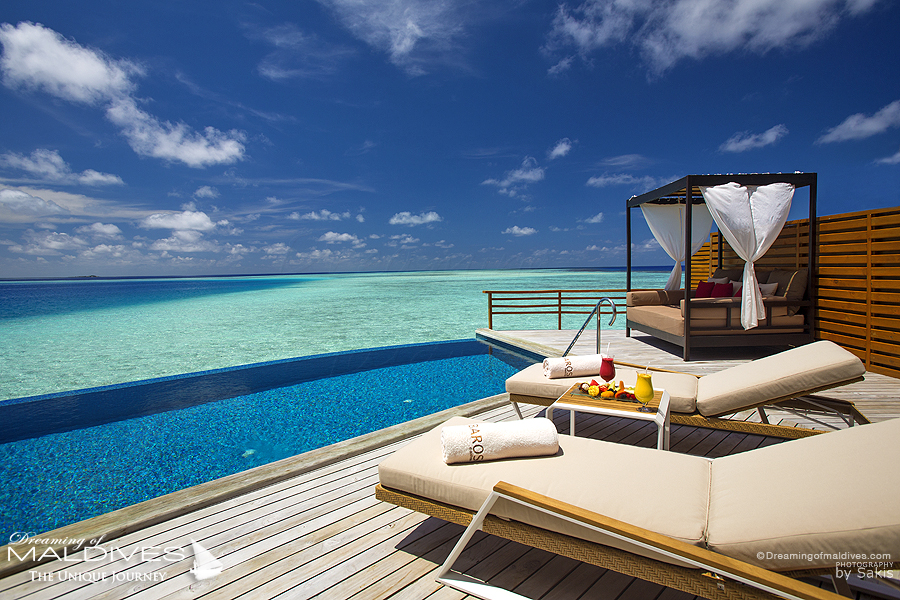
Baros Maldives, North Male Atoll
Baros Maldives runs a hands-on coral transplantation and coral sponsorship program led by its resident marine biologist. Guests can take part by collecting broken but still-living coral fragments from the seabed and attaching them to island-made coral tables.

The Coral Regeneration Project at Baros began in 2009, and the Marine Centre continues to maintain the coral tables by cleaning algae and monitoring growth. It is a small-scale but well-established restoration program on a classic Maldives house reef island.
I already covered this coral work in detail on Dreaming of Maldives : Baros Maldives Coral Restoration Program, The Coral Cube Planting Initiative.
For more about the resort, read also : my Baros Maldives Review, Snorkeling at Baros Maldives.
BOOK BAros MAldives

in association with our trusted partner
& personal counsellor in Maldives
Six Senses Laamu, Laamu Atoll
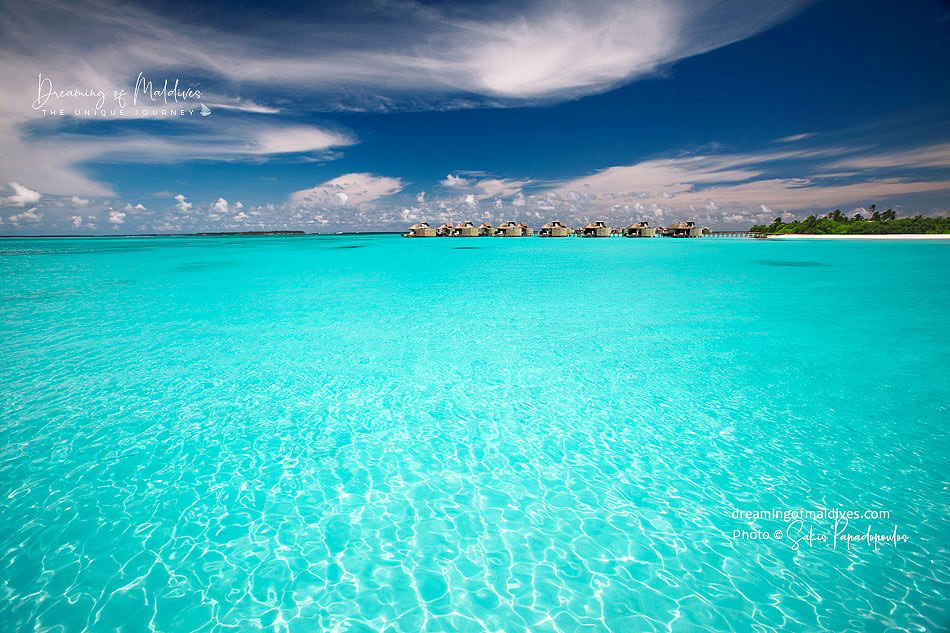
Six Senses Laamu is home to the Maldives Underwater Initiative (MUI), one of the country’s most science-led resort marine programs. Its work includes reef monitoring, coral restoration, coral spawning, larval restoration and micro-fragmentation.

After the 2024 bleaching event, the team reported major coral planting work in Laamu using both coral fragments and larval restoration methods. The program stands out because it combines resort conservation, NGO partnerships, marine research, education and long-term monitoring across the atoll.
Read also my Six Senses Laamu Review and my diver interview Diving at Six Senses Laamu.
Dreaming of Six Senses Laamu ?
in association with our trusted partner
& personal counsellor in Maldives
Banyan Tree Vabbinfaru, North Male Atoll
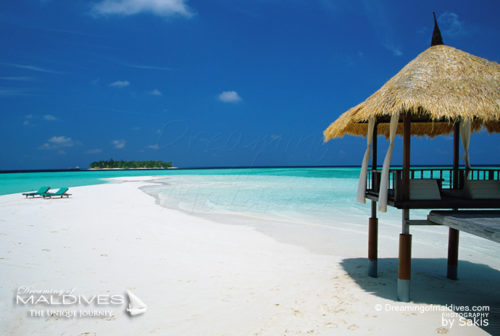
Banyan Tree Vabbinfaru has one of the longest marine conservation histories in the Maldives. The Banyan Tree Marine Lab opened at the resort in 2004, following earlier marine conservation work dating back to 1996.

Today, the resort documents reef restoration using coral transplantation, electric reef structures and micro-fragmentation. Its program focuses on assisting natural reef recovery, increasing resilience and restoring damaged reef areas around the island, supported by a dedicated marine biology and sustainability framework.

Read also my guide to the best Maldives resorts for snorkeling we have personally seen, where Banyan Tree Vabbinfaru appears for its extraordinary house reef.
BOOK Banyan Tree Vabbinfaru
in association with our trusted partner
& personal counsellor in Maldives
Four Seasons Resort Maldives at Kuda Huraa, North Male Atoll
Four Seasons Resort Maldives at Kuda Huraa is one of the historic names in Maldives coral restoration. In partnership with Reefscapers, the resort began coral frame restoration in 2001, making it one of the longest-running resort-based coral programs in the country.

The project uses coral frames planted and maintained by marine biologists at the Marine Savers centre. Guests can sponsor frames and follow their growth through photo updates, turning coral restoration into both a conservation project and a long-term educational experience.
Four Seasons Resort Maldives at Landaa Giraavaru, Baa Atoll
Located in Baa Atoll, Four Seasons Resort Maldives at Landaa Giraavaru is part of the same Reefscapers and Marine Savers coral restoration network.

The resort has become one of the most documented marine conservation hubs in the Maldives, with coral frames, coral spawning research, reef monitoring, turtle rehabilitation and marine education. In 2025, Four Seasons Maldives and Reefscapers marked the planting of their 9,000th coral frame, a major milestone for resort-based reef restoration.
Read also Meet manta rays at Four Seasons Maldives at Landaa Giraavaru.
BOOK FOUR SEASONS Maldives Landaa Giraavaru
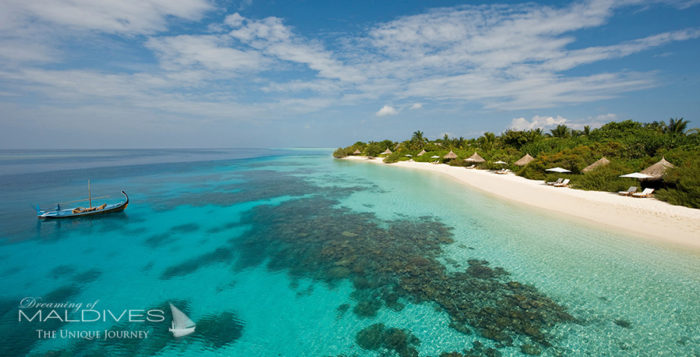
in association with our trusted partner
& personal counsellor in Maldives
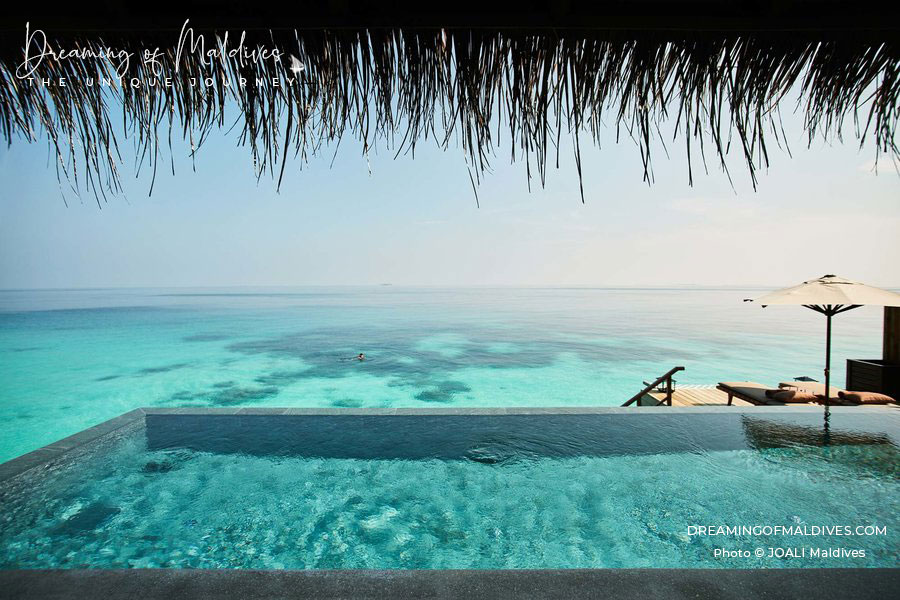
JOALI Maldives, Raa Atoll
JOALI Maldives runs a documented Reef Restoration Programme in Raa Atoll, with a distinctive approach based on Mineral Accretion Technology. This method uses a low-voltage electrical current through underwater structures to help corals grow faster and strengthen their skeletons.

The project gives JOALI a more technical place in Maldives coral restoration, beyond classic coral frames. It also fits the resort’s wider philosophy, where art, design, nature and conservation are part of the island experience.
Read also : Dreaming of JOALI Maldives. A Unique Ultra Luxury Resort with a Maldivian Soul
Dreaming of JOALI MALDIVES ?
in association with our trusted partner
& personal counsellor in Maldives
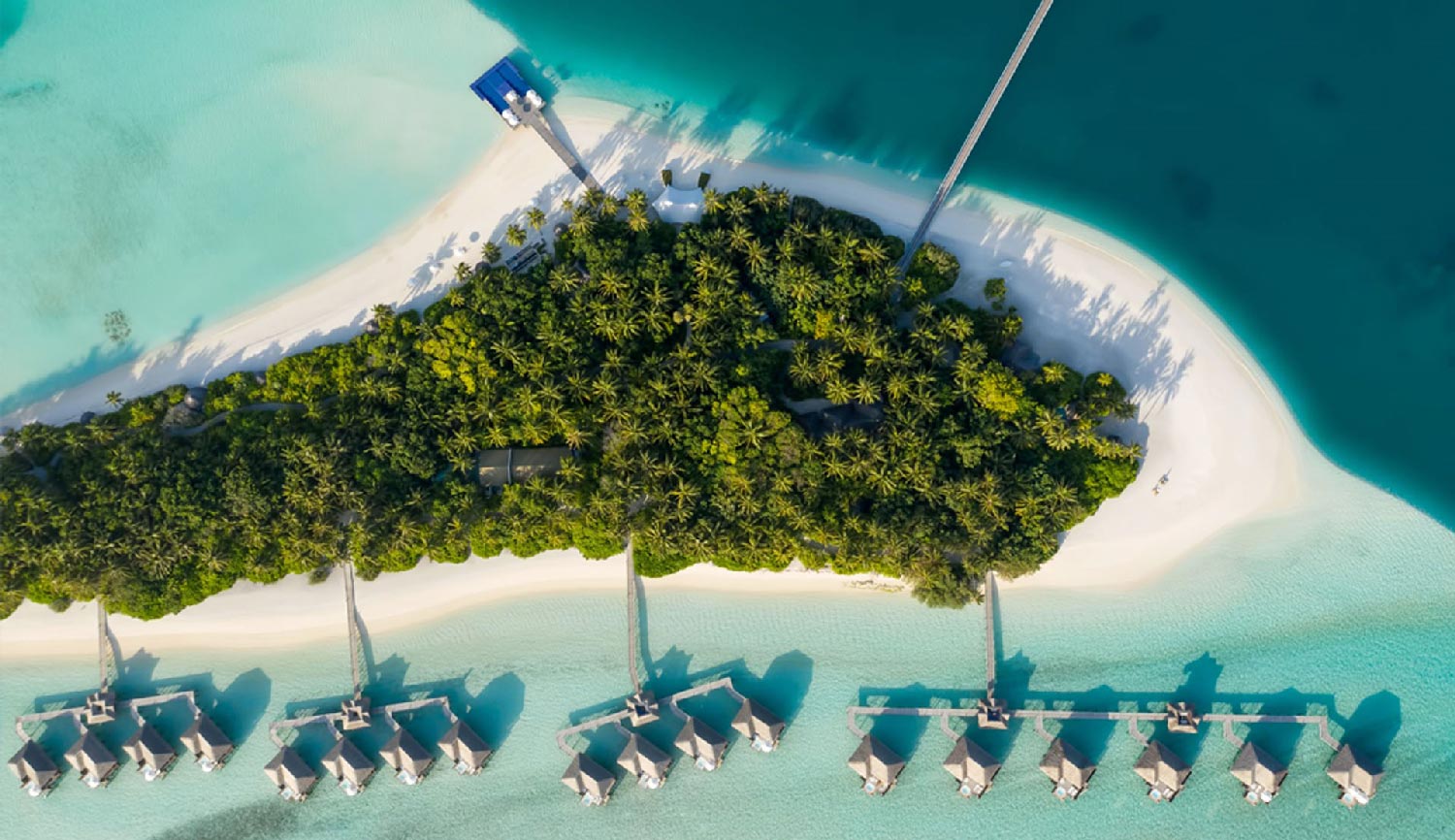
Conrad Maldives Rangali Island, South Ari Atoll
Located at the heart of SAMPA, Conrad Maldives Rangali Island offers a hands-on coral conservation program in South Ari Atoll. Guests can join resident marine biologists, plant a coral frame in the resort’s nursery and receive updates as the corals grow.

It is a clear example of resort-based coral gardening in the Maldives, where conservation becomes part of the guest experience.
For Conrad, a resort surrounded by remarkable marine life, reef preservation is directly connected to the beauty and future of the island.
Read also : The Maldives Best Resorts To Stay for Whale Sharks in Ari Atoll
BOOK Conrad Maldives Rangali Island
in association with our trusted partner
& personal counsellor in Maldives
Diamonds Athuruga & Thudufushi, South Ari Atoll
Diamonds Athuruga and its sister island Thudufushi, are both part of the Diamonds Resorts Coral Conservation Project, first launched in 2015. At Athuruga, the program became more structured in 2018 with the employment of a full-time researcher to assess and scale up coral restoration efforts.
The project focuses on protecting and regrowing corals around the resort, while also encouraging responsible tourism. Its strength is the combination of resort-level restoration, long-term monitoring and scientific work in South Ari Atoll.

Diamonds Thudufushi has become one of the more visible Maldives resorts using reef-star restoration. The resort partnered with MARS Sustainable Solutions and the MARRS system, which uses hexagonal metal reef stars as stable bases for coral fragments on degraded reef areas. Initial trials with 203 reef stars led to a larger target of expanding the restoration site with 1,000 additional reef stars.
This makes Thudufushi one of the most ambitious reef-star projects in the Maldives resort sector.

South Ari Atoll is also one of the Maldives’ most important marine-life regions, especially for whale sharks and snorkeling.
Read also my wider reef and snorkeling resources : 3 of the best atolls for snorkeling in Maldives.
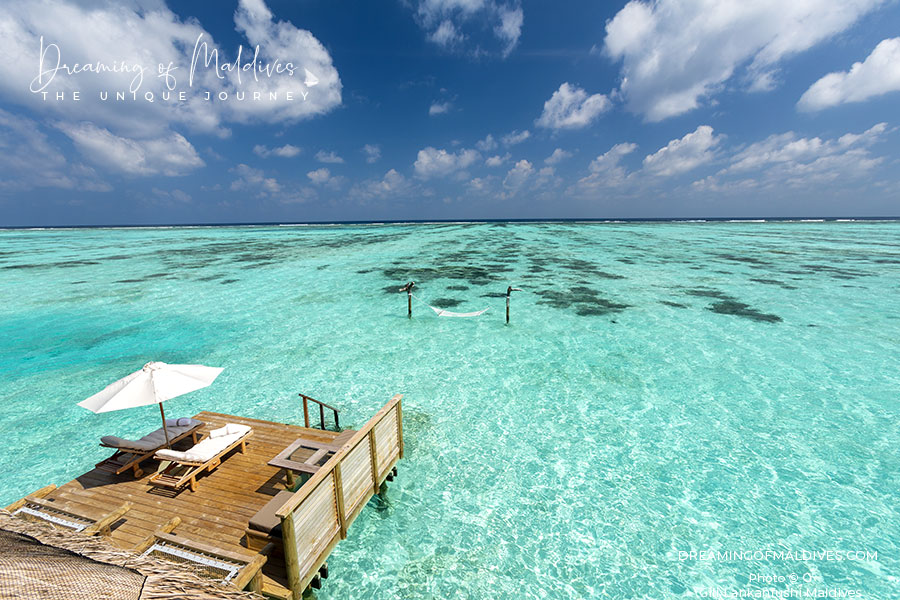
Gili Lankanfushi Maldives, North Male Atoll

Gili Lankanfushi’s marine work is centred around Gili Veshi, the resort’s marine research facility. Its marine biologists lead reef cleaning, coral restoration, guest education and data collection for conservation partners.
The resort is also known for its Coral Lines Project, started in 2014 to support reef regeneration by growing coral fragments on suspended ropes before they are returned to the reef. The program fits naturally with Gili Lankanfushi’s long-standing identity as one of the Maldives’ most eco-conscious luxury resorts.
Read also : Gili Lankanfushi Maldives Review and Diving and Snorkeling at Gili Lankanfushi Maldives
BOOK Gili Lankanfushi Maldives
in association with our trusted partner
& personal counsellor in Maldives
Other Coral Restoration Programs in the Maldives
Beyond this, other Maldives resorts are also working to preserve and regrow corals. Some programs are smaller, some are newer, but they still matter.
They may not all have the same scale, history or scientific depth as the programs listed above, but they are part of the same effort: protecting what can still be saved, restoring damaged reef areas and keeping coral life visible around the islands.

Anantara Dhigu, South Male Atoll.
Anantara Dhigu’s Coral Adoption Programme launched in 2010 to accelerate reef regeneration and strengthen the surrounding reef ecosystem. Guests can sponsor a coral rope and take part in the resort’s reef restoration story.
Read also : my review of Anantara Dhigu Maldives Resort
The St. Regis Maldives Vommuli Resort, Dhaalu Atoll.
Reefscapers program, coral frames, resident marine biologist, guest workshops and guided snorkeling.
Velaa Private Island Maldives, Noonu Atoll.
Velaa Coral Project, using Biorock technology for coral regeneration.
Anantara Kihavah, Baa Atoll.
Coral Adoption Programme where guests can plant coral fragments in a reef nursery, receive personalized name plaques, and monitor their coral’s growth through ongoing photo updates.

Sheraton Maldives Full Moon Resort & Spa, North Male Atoll
Coral frame adoption program with Reefscapers.
Nova Maldives, South Ari Atoll.
Depth-adjustable floating coral nursery, designed to improve survival in warmer waters.
Baglioni Resort Maldives, Dhaalu Atoll.
Coral reef restoration project with marine biology and guest education.
Cora Cora Maldives, Raa Atoll.
Five-year coral restoration project focused on reef diversity and resilience.
Kuramathi Maldives, Rasdhoo Atoll.
Muraka Project, coral propagation led by the resort Eco Centre.
Angsana Velavaru, Dhaalu Atoll.
Guest coral planting / coral frame activity, linked to reef recovery and bleaching damage.
Can Coral Restoration Protect the Maldives From El Niño?
Coral restoration cannot protect the Maldives from El Niño. It cannot cool the sea, prevent marine heatwaves or stop coral bleaching when temperatures remain too high for too long.
But it can protect what is still alive.
That is the real value of these programs. Coral frames, coral ropes, reef stars, nurseries and marine labs help preserve coral fragments, rebuild small reef habitats and create data that may help scientists understand which corals are more resilient. In a warming ocean, this work is no longer just a beautiful resort activity. It is emergency reef care.

For more scientific context, read our article about Maldives coral bleaching and El Niño. You can also explore our guide to Maldives weather and climate, as sea temperatures, seasons and monsoons are all part of the wider reef story.
More About Snorkeling and Coral Reefs in the Maldives
Coral restoration is only one part of the reef story. To understand what these reefs mean for travelers, snorkelers and marine life, explore all my snorkeling guides in the Maldives.
From house reefs and lagoon reefs to whale sharks, manta rays, reef fish and the best snorkeling islands, this section brings together years of field experience, resort visits and underwater observations across the atolls.
CURIOUS ABOUT MALDIVES SNORKELING SHARKS AND FISHES ?
don’t miss /
The coral gardens of the Maldives were not built in a season. They took years, sometimes decades, to develop into the underwater landscapes divers and snorkelers remember. Rebuilding them will also take time.
The most honest way to see these resort programs is not as a solution to climate change, but as a lifeline.
They cannot stop El Niño. They cannot save every reef. But they can help damaged reefs recover, preserve coral diversity and keep hope alive beneath the surface.
For the Maldives, that matters.


Follow us on Facebook, Youtube and Instagram
for more Maldives Dreams & Stories
Your TOP Best Maldives Resorts 2027
YOUR CHOICE. YOUR DREAM. YOUR VOICE
[ Official ]
Traveler's Choice
16th Edition